PDR Portal — Preventing Duplicate Reversals
Design web app to prevent Duplicate Reversals by identifying and excluding auto-reversal transactions.
- Role
- UX Designer
- Tools
- Figma, Microsoft Teams
- Tags
- UI/UXWebapp
The 'What'
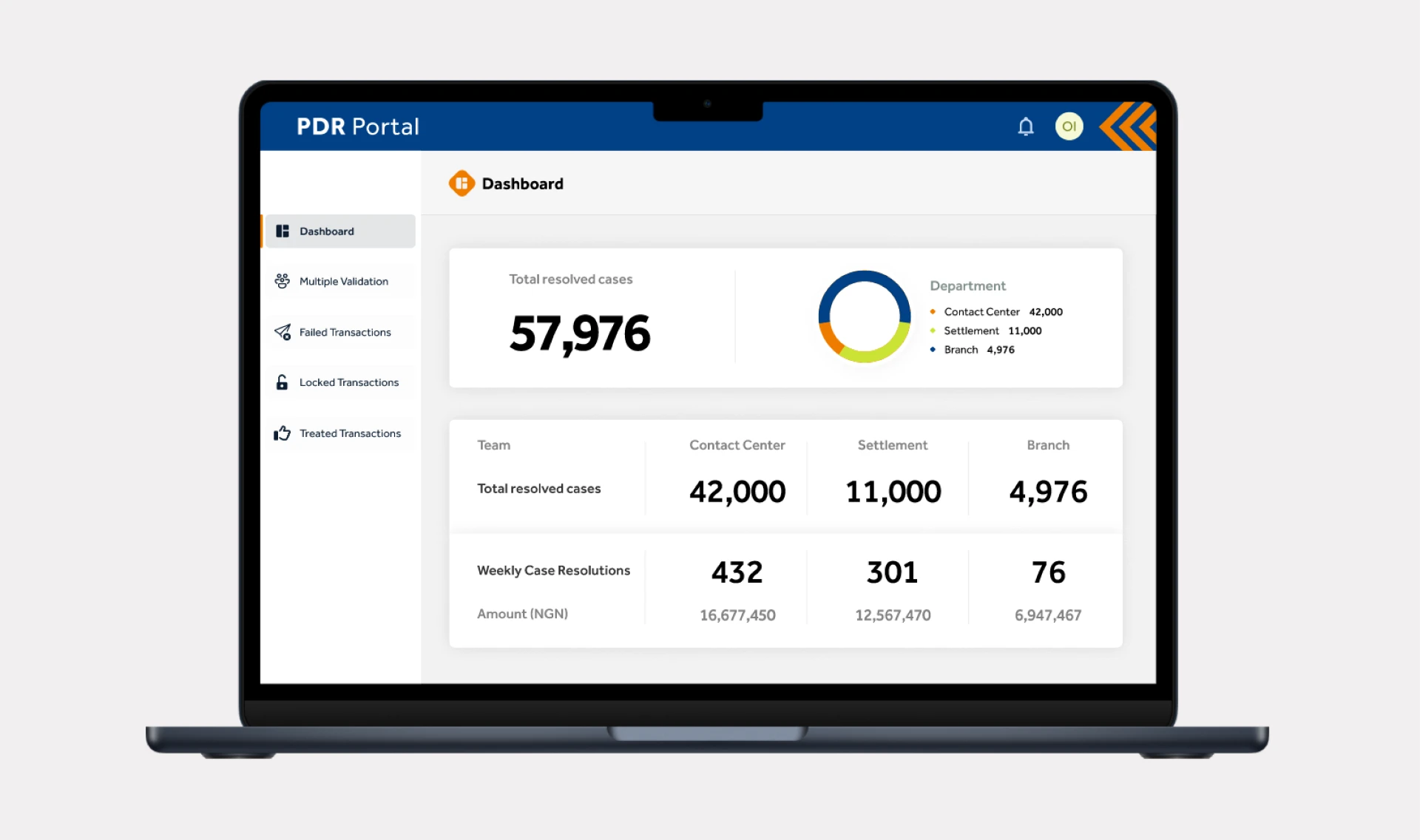
The PDR Portal is an internal platform designed to address a critical challenge in financial operations: preventing duplicate reversal requests on the Flexcube system. Duplicate reversals lead to operational inefficiencies, financial discrepancies, and increased auditing workload. The PDR Portal ensures that reversals are streamlined, secure, and error-free through robust algorithms and user-friendly interfaces.
The 'Why'
Duplicate reversal requests were a recurring issue in financial processes. Manual validation and lack of real-time oversight resulted in:
- Financial Losses — erroneous double reversals causing monetary inconsistencies
- Operational Bottlenecks — staff spending unnecessary time rectifying errors
- Reduced Trust — auditors and stakeholders raising concerns about process reliability
The need for a solution was imperative to protect institutional integrity and ensure seamless transaction handling.
The 'How'
We began with thorough research to identify the root causes and user pain points associated with the existing reversal process. Through collaboration with the operations team, we identified key problems and created a design solution that prioritized accuracy, transparency, and efficiency.
Core Features Designed
01
Duplicate Detection Algorithms
Developed algorithms that compare transaction IDs, timestamps, and reversal reasons in real-time to flag potential duplicates.
02
Transaction Lock Mechanism
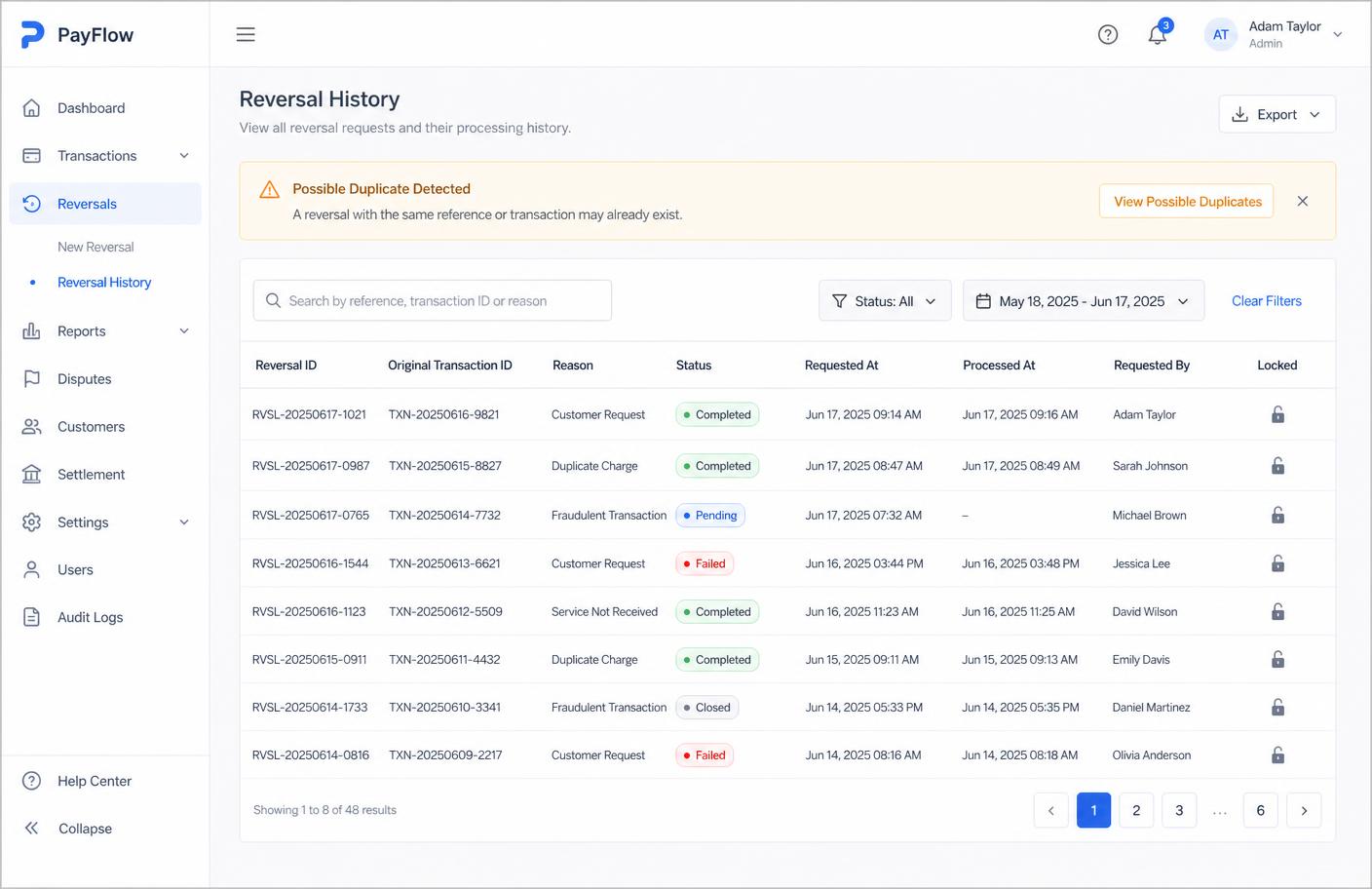
Enabled staff to lock a transaction while processing a reversal to prevent others from initiating the same action simultaneously.
03
Reversal History Dashboard
A centralized, streamlined interface displaying all reversal actions, complete with timestamps, status updates, and associated staff details.
04
Alerts & Notifications
System-generated alerts for flagged duplicates or pending approvals.
The Impact
95%
Reduction in Duplicate Reversals
Within the first three months post-launch, financial discrepancies caused by duplicate reversals were drastically reduced.
↑
Enhanced Operational Efficiency
Staff productivity improved due to simplified workflows and reduced error handling.
★
Boosted Stakeholder Confidence
Auditors and managers reported increased trust in the reversal process's reliability.
User Research
To understand the problem deeply, we conducted interviews and observations with Flexcube users and other stakeholders.
- Interviews with 20 staff members — challenges, needs, and workflow limitations
- Shadowing operations — to observe the process live
Interview insights — frequent pain points: difficulty identifying duplicates due to manual tracking; lack of transparency on who initiated or approved reversals; errors from insufficient validation protocols.
User behavior observed — 70% of staff relied on manual logs for transaction tracking; 30% experienced recurring overlapping reversal incidents.
The Key Motivators
- — A secure platform that eliminates redundancies and errors
- — Transparent workflows that allow easy tracking and accountability
- — Real-time feedback mechanisms for faster decision-making
The Design
Design principles that shaped every screen:
- Clarity & Simplicity — intuitive layouts, reduced information overload
- Real-Time Validation — immediate duplicate detection to reduce processing delays
- Error Prevention — fail-safes like transaction locks and multiple approval levels
Educating Users
- — Interactive onboarding step-by-step walkthroughs for new users
- — Hands-on training workshops to familiarize staff with the system
What I Learned
Error prevention beats error correction: the biggest wins came from removing the possibility of a duplicate reversal rather than reporting one after the fact. Shadowing operations was also worth more than any survey — the real workflow lived in spreadsheets nobody had documented.